7. Human Health and Disease
Objectives
What you will learn
- Classify infectious pathogens, detailing causative agent, transmission mode, and clinical symptoms for typhoid, pneumonia, malaria, amoebiasis, and ascariasis.
- Trace the life cycle of Plasmodium across primary mosquito vector and secondary human host stages.
- Differentiate innate immunity barriers from acquired immunity branches (humoral B-cell vs. cell-mediated T-cell).
- Label the four polypeptide chains and antigen-binding clefts of an immunoglobulin (H2L2) antibody molecule.
- Differentiate Primary lymphoid organs (bone marrow, thymus) from Secondary lymphoid organs (spleen, lymph nodes, MALT).
- Trace the intracellular replication cycle of Human Immunodeficiency Virus (HIV) using reverse transcriptase in helper T lymphocytes.
- Contrast benign and malignant neoplasms, explaining contact inhibition loss, metastasis, and oncogene activation.
Introduction
Introduction
For a long time, people thought that health was a balance of fluids in the body. Physicians in ancient Greece described health in this way about two thousand years ago. The idea was thoughtful for its time, but it could not be tested. Nobody could measure the fluids, and nobody could prove that balancing them cures disease.
Modern medicine began when scientists showed that tiny germs cause many diseases. Once the cause was known, prevention became possible: clean water systems, antiseptics, vaccines and antibiotics. These steps saved more lives than almost any other development in history.
In the 1860s the French scientist Louis Pasteur boiled broth in flasks with bent necks. Dust settled in the bend, and the broth stayed clear for months. When he broke the neck so that dust could fall in, microbes grew within days. This showed that microbes come from other microbes, not from lifeless matter. Around the same period, the German physician Robert Koch linked particular bacteria to particular diseases and set out rules for proving such a link. Together, their work founded the germ theory of disease.
In 1928 the British scientist Alexander Fleming noticed that a mould growing on a dish had killed the bacteria around it. The mould released a substance he called penicillin. It took more than a decade before other scientists turned it into a usable medicine, but penicillin then became the first widely used antibiotic. It showed that natural products can cure infections that once killed. (A teacher should confirm the exact years and names before use in an exam answer.)
Vaccines added the second great weapon. In the late 1700s the English doctor Edward Jenner used material from cowpox sores to protect people against smallpox. Smallpox was later declared removed from the world in 1980. You will meet his story in full in section 7.2.
In the sections below you will see the whole picture in order. First, how germs attack the body. Then, how the body fights back. Then, what happens when the defence fails or when cell division loses control. Finally, how habits such as drug and alcohol use damage health, and how young people can protect themselves.
7.1 Common diseases in humans
A school reopens after heavy rain. Within a week, several students are absent with fever, stomach pain or cough. The rain itself did not make them ill. It created the conditions: dirty water, more mosquitoes and closer contact indoors. This section explains that chain — from germ to disease to prevention — one link at a time.
Health is not just the absence of disease. It is a state of complete physical, mental and social well-being. A person is healthy when the body works well, the mind is calm and clear, and the person can take part in family and community life.
Three things keep people healthy: a balanced diet, personal hygiene and regular exercise. Awareness about diseases, vaccination, control of vectors, proper disposal of waste, and safe food and water also matter a great deal.
A disease exists when one or more organs or systems do not work properly, and we see signs and symptoms. A sign is something a doctor can measure, such as a fever or a rash. A symptom is something the patient feels, such as pain or tiredness.
There are three broad causes of poor health:
- Genetic disorders: problems passed from parents or present from birth, such as haemophilia.
- Infections: diseases caused by germs such as bacteria, viruses, fungi, protozoa and worms.
- Lifestyle: food and water, sleep, exercise, stress, and habits such as smoking and alcohol use.
Diseases are also grouped as infectious (they spread from one person to another) and non-infectious (they do not spread, for example cancer). The infectious ones are caused by pathogens, which are organisms that cause disease. Most parasites are pathogens, because they harm the host they live in. A parasite is an organism that lives on or in another organism, called the host, and takes food from it. A vector is an animal, often an insect, that carries a pathogen from one person to another without itself suffering from the disease.
| Group | Example diseases in this chapter |
|---|---|
| Bacteria | Typhoid, pneumonia |
| Virus | Common cold |
| Protozoa (single-celled animals) | Malaria, amoebiasis |
| Worms (helminths) | Ascariasis, filariasis |
| Fungi | Ringworm |
Read the table as a map, not as a list to memorise at once. The left column names five groups of germs. The right column names the diseases each group causes in this chapter. As you read each disease below, come back and point to its row. By the end, you should be able to place every disease in its row without looking.
Typhoid is caused by the bacterium Salmonella typhi. It spreads through food and water contaminated with the bacteria. The bacteria enter the small intestine and then reach the blood. Signs include sustained high fever (39 to 40 °C), weakness, stomach pain, constipation, headache and loss of appetite. In serious cases the wall of the intestine can be perforated, and the disease can be fatal.
Pneumonia is caused by bacteria such as Streptococcus pneumoniae and Haemophilus influenzae. It spreads by droplets from coughs and sneezes, and through shared objects such as glasses and utensils. It infects the alveoli, the tiny air sacs of the lungs, which fill with fluid so breathing becomes hard. Signs include fever, chills, cough and headache. In severe cases the lips and nails turn bluish from lack of oxygen.
Typhoid can be confirmed by the Widal test, a blood test that detects antibodies against the bacteria. Some people carry the typhoid bacteria and spread them without ever feeling ill. Such carriers look healthy but pass the germ in their waste. A famous early case was a cook in the early 1900s who passed typhoid to many people through the food she prepared, although she herself had no symptoms. This is why food handlers must follow strict hygiene.
A group of viruses called rhinoviruses causes the common cold. They infect the nose and airways but not the lungs. Signs and symptoms are a blocked or runny nose, sore throat, hoarse voice, cough, headache and tiredness. A cold usually lasts three to seven days.
A cold spreads by droplets from coughs and sneezes, and by touching objects that an infected person has handled. There is no cure that kills the virus directly. The body clears it on its own, and rest and fluids help while it does so. Antibiotics do not cure a cold, because antibiotics kill bacteria, not viruses. Taking them for a cold does no good and can cause harm.
Malaria is caused by Plasmodium, a tiny protozoan. Three species — P. vivax, P. malariae and P. falciparum — cause different forms. Malignant malaria, caused by P. falciparum, is the most serious form and can be fatal. The disease is spread by the bite of an infected female Anopheles mosquito. Note the two roles: the mosquito is the vector, and Plasmodium is the cause.
Read the figure in three zones. The top two boxes are the start: an infected mosquito bites, and sporozoites enter the blood and multiply in liver cells. The middle two boxes are the illness: the parasites invade red blood cells, multiply and burst them, which causes fever — and some parasites become gametocytes. The bottom two boxes close the loop: another mosquito takes in the gametocytes, the parasite matures inside it, and sporozoites reach its salivary glands, ready for the next bite. Human stages on top, mosquito stages below: that split is the key to the whole figure.
Inside the red blood cells, the parasites multiply and the cells burst at regular intervals. The burst releases a waste substance called haemozoin, which brings the typical cycle of chills and high fever that returns every few days. Because the liver stage comes first, the disease can appear some days after the bite.
Suppose (imagined values) 10 red blood cells are infected at first, and each burst round infects 8 times as many new cells. How many cells are infected after 3 rounds?
After one round, the count multiplies by 8. After 3 rounds, the multiplier is .
Infected cells = .
Result: About 5,120 cells are infected after 3 rounds. Each round multiplies the last, so the fever returns stronger until treatment stops the cycle.
Amoebiasis (amoebic dysentery) is caused by Entamoeba histolytica, which lives in the large intestine. Signs are constipation, stomach pain and cramps, and stools with mucus and blood. Houseflies can carry the parasite from faeces to food. Because the fly itself is not infected, it is called a mechanical carrier: it carries the germ on its body. Drinking contaminated water and eating contaminated food spread the disease.
Ascariasis is caused by Ascaris, the common round worm, which lives in the intestine. Signs include internal bleeding, muscular pain, fever, anaemia and blockage of the intestine. The eggs of the worm leave the body in faeces and spread through soil, water, vegetables and fruit. This is why hands and raw food must be washed: the eggs are too small to see, but washing removes them.
Filariasis (elephantiasis) is caused by the worms Wuchereria bancrofti and W. malayi. The worms live for years in the lymph vessels, usually of the lower limbs. Long-lasting (chronic) inflammation slowly blocks the vessels, so the legs — and sometimes the genital organs — swell greatly. The disease spreads by the bite of the female Culex mosquito. Because the worms live for years, the swelling builds up slowly and lasts long.
Fungi of the genera Microsporum, Trichophyton and Epidermophyton cause ringworm. Dry, scaly patches appear on the skin, nails and scalp, with intense itching. Heat and moisture help fungi grow, so ringworm is common in skin folds, such as between the toes. It spreads when people share towels, clothes or combs. It is not caused by a worm at all — the name comes only from the ring shape of the patches.
Suppose (imagined values) a hostel survey finds 40 students with ringworm patches out of 800 students checked. What share is affected, and how many are free of it?
Share affected = per cent.
Students free of it = .
Result: About 5 per cent are affected, and 760 students are free of it. A small share still means dozens of cases — which is why shared towels and combs matter.
Read the four boxes as four doors into the body. Top left, droplets: coughs and sneezes spray germs of cold and pneumonia into the air. Top right, food and water: dirty food or water carries typhoid and amoebiasis germs into the gut. Bottom left, mosquito bite: an infected bite puts malaria or filariasis parasites straight into the blood. Bottom right, touch and shared objects: skin contact and shared towels or combs pass ringworm fungi. Every prevention method in the next part closes one of these four doors.
Medicines cure the patient, but prevention protects the whole community. The following measures work against many diseases at once:
- Personal hygiene: keep the body clean, wash hands before eating, drink clean water, eat clean food, and keep nails short.
- Public hygiene: proper disposal of waste and excreta, safe water supply, regular cleaning and disinfection of water tanks, control of flies, rats and other carriers, and clean food markets.
- Vector control: do not let water stagnate, because mosquitoes breed in it. Use nets, repellents, spraying, and introduce fishes that eat mosquito larvae in water bodies near homes.
- Avoid contact: keep away from infected people and their belongings during an infection, and do not share towels, clothes or utensils.
- Vaccines and medicines: vaccines (for example for tetanus, polio, diphtheria and whooping cough) prevent disease, and antibiotics and other drugs treat it. Smallpox has been completely removed from the world by vaccination.
Read the list as layers of defence. Personal hygiene blocks germs at the mouth and skin. Public hygiene removes them from water and waste. Vector control removes the carrier. Avoiding contact breaks the chain between people. Vaccines prepare the body in advance. No single layer is perfect, but together they leave germs almost no way through.
| Disease | Pathogen | Spreads by | Key prevention |
|---|---|---|---|
| Typhoid | Bacterium (Salmonella typhi) | Contaminated food and water | Clean water, food hygiene, Widal test and treatment |
| Pneumonia | Bacteria (Streptococcus, Haemophilus) | Droplets, shared utensils | Avoid contact, vaccination |
| Common cold | Rhinoviruses | Droplets, touched objects | Avoid contact, hand washing |
| Malaria | Protozoan (Plasmodium) | Bite of female Anopheles | Nets, repellents, no stagnant water |
| Amoebiasis | Protozoan (Entamoeba) | Contaminated food and water, houseflies | Clean food and water, fly control |
| Ascariasis | Round worm (Ascaris) | Soil, water or food with eggs | Washing hands and raw food, sanitation |
| Filariasis | Worms (Wuchereria) | Bite of female Culex | Mosquito control |
| Ringworm | Fungi (Microsporum and others) | Shared towels, clothes, combs | Personal hygiene, no sharing |
Read the table row by row and cover the last column each time. For every disease, say the pathogen, the route and one prevention step before uncovering. If you can do all eight rows, the whole section is in your head. Notice the pattern: food-and-water diseases need clean food and water, mosquito diseases need mosquito control, and contact diseases need hygiene.
Fix germs, routes and prevention before moving on.
7.2 Immunity
Every day we meet many germs, but we seldom fall ill. Food, water, air and touch all carry microbes, yet most days nothing happens. The reason is immunity, the ability of the body to defend itself against disease-causing agents. Immunity is of two types: innate (present from birth) and acquired (built during life).
Innate immunity is the defence you are born with. It is non-specific, which means it works against all germs in the same way. It does not need to recognise the particular germ, and it does not remember it afterwards. It has four kinds of barriers:
| Barrier | Examples | How it protects |
|---|---|---|
| Physical | Skin; mucus lining the breathing, digestive and urinary tracts | Stops microbes from entering; mucus traps them |
| Physiological | Acid in the stomach, enzymes in saliva and tears | Slows or stops microbes from growing |
| Cellular | White blood cells and macrophages | Engulf and digest microbes (phagocytosis) |
| Cytokine | Interferons released by virus-infected cells | Warn nearby healthy cells and protect them from the virus |
Read the table row by row and ask how each barrier works. Physical barriers block entry: skin is a wall, and mucus is a sticky trap. Physiological barriers poison the surroundings: stomach acid and the enzymes in tears and saliva make growth hard. Cellular barriers eat the invader: white blood cells surround a microbe and digest it, a process called phagocytosis (cell eating). Cytokine barriers send warnings: an infected cell releases interferons, which tell neighbouring cells to raise their defences against the virus.
Why does this system work against germs it has never seen? Because it attacks features that almost all microbes share, such as exposed surfaces and the need to enter through skin or mucus. It is broad rather than exact — a wall stops everyone, invited or not.
Acquired immunity is specific to each pathogen, and it has memory. The first time the body meets a pathogen, it makes a primary response, which is slow and weak. At a later meeting with the same pathogen it makes a secondary response, which is fast and strong, because the body remembers. This memory is the single most important idea in this section.
Graph of antibody level against days. After the first exposure the level rises slowly to a low peak of 10 units. After a second exposure on day 21 the level rises much faster and reaches about 100 units, ten times higher.
Read the graph axis by axis. The bottom axis counts days from 0 to 60. The side axis shows antibody level in units. After the first exposure (day 0), the curve climbs slowly to a low peak. After the second exposure (day 21), it shoots up far higher and much faster. The second hill dwarfs the first: that difference is memory made visible.
In the graph, the first peak reaches 10 units and the second peak reaches 100 units (imagined values). By what factor is the second response larger? What does this show?
Factor = second peak first peak = .
The second response is 10 times as large, and it also rises faster.
Result: The factor is 10. A large, fast second response is the sign of immune memory.
| Primary response | Secondary response | |
|---|---|---|
| Speed | Slow; takes days to build | Fast; starts almost at once |
| Strength | Weak; low antibody level | Strong; high antibody level |
| Cells behind it | New lymphocytes meeting the germ | Memory cells from the first meeting |
Read the table as before and after. Before memory (left column), everything is slow and weak. After memory (right column), the same germ meets trained cells and the response is fast and strong. Whenever a question asks why the second attack of a disease is milder, this table holds the answer.
Two kinds of white blood cells carry out the acquired response: B lymphocytes and T lymphocytes. B cells make proteins called antibodies to fight the pathogen. T cells do not make antibodies, but they help B cells to make them. Because antibodies are found in the blood, this part of the response is called humoral immunity (the word humor means fluid). A second part, called cell-mediated immunity (CMI), is carried out by T cells directly. CMI is the reason grafts and transplants from other people are rejected: the body treats the new organ as foreign. Tissue matching and blood group matching are needed before any transplant, and the patient takes drugs that lower the immune response for life.
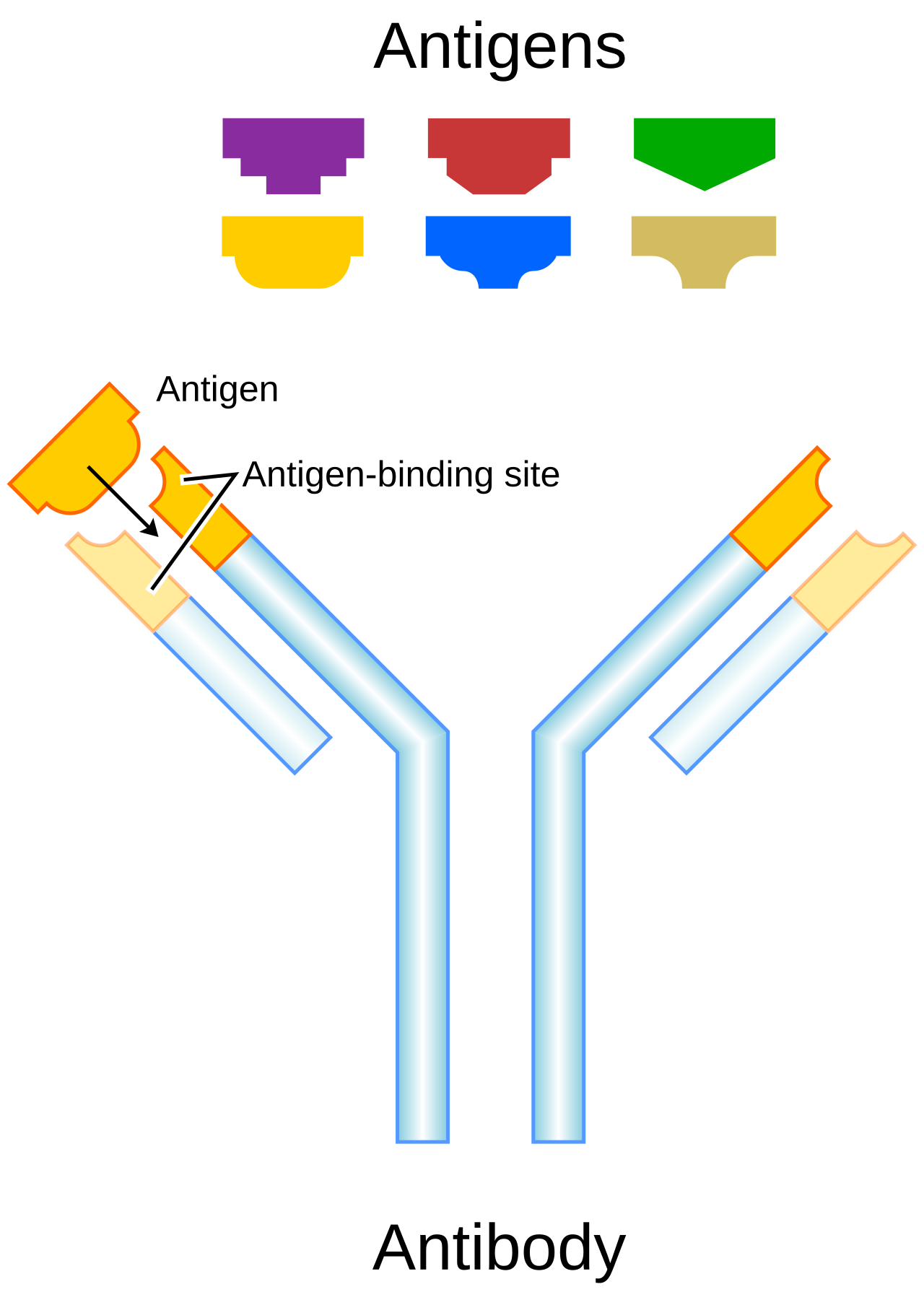

Read the figure from the tips down to the stem. The two tips of the Y are the antigen-binding sites: each tip catches one matching germ particle. The arms of the Y are built from the four chains — two heavy chains inside and two light chains outside. The stem is the same in each type of antibody, while the tips differ from one antibody to the next.
Trace each labelled part of the antibody in the figure and state the total counts.
Find the two tips of the Y, shaded in the figure. These are the antigen-binding sites: each fits one matching germ particle, like a lock fits its key.
Find the two long inner lines labelled heavy chain (H). Find the two shorter outer lines labelled light chain (L). Two heavy plus two light make four chains in all, written H2L2.
Find the stem of the Y. The stem is the same in each type of antibody, while the tips differ. Different classes are named IgA, IgM, IgE and IgG.
Result: An antibody has 4 chains (H2L2) and 2 antigen-binding sites. The tips catch the germ; the stem decides the class.
Acquired immunity comes in two forms. In active immunity, the body makes its own antibodies after meeting the germ or vaccine. In passive immunity, ready-made antibodies are received from outside. The table below compares them:
| Active immunity | Passive immunity | |
|---|---|---|
| Antibodies made by | The person's own body | Another person or animal |
| Speed | Slow; takes time to build | Immediate |
| Duration | Long lasting because of memory | Short; no memory is formed |
| Example | After infection or vaccination | Antibodies from mother to baby; injected antiserum |
Read the table row by row and watch the trade. Active immunity is slow but lasting, because the body learns. Passive immunity is instant but short, because nothing is learned. The examples in the last row are worth memorising: a baby receives antibodies through the placenta during pregnancy and through the first milk (colostrum, rich in IgA) after birth. Both are passive and natural.
Classify each case as active or passive immunity, and give the reason.
A baby fed on first milk (colostrum). The antibodies were made by the mother, not the baby, so it is passive. No memory is formed in the baby.
A child given polio drops. The drops train the body to make its own antibodies and memory cells, so it is active.
A person bitten by a snake and injected with antiserum. Ready-made antibodies are given because there is no time to wait, so it is passive and immediate.
Result: Colostrum: passive. Polio drops: active. Antiserum: passive. Ask one question every time: who made the antibodies?
A vaccine is a harmless form of a pathogen, or part of one, that teaches the immune system without causing the disease. The vaccinated person makes antibodies and memory cells. If the real germ arrives later, the response is fast and strong — the secondary response you saw in the graph. A vaccine is therefore the use of immune memory in advance.
When a person is bitten by a snake, we cannot wait for the body to make its own antibodies. Doctors inject ready-made antibodies (antiserum). This is passive immunisation: instant help with no memory. The same idea protects newborn babies whose mothers carry antibodies against tetanus.
Genetic engineering lets us make the protein part of a pathogen in yeast or bacteria instead of growing the germ itself. The hepatitis B vaccine is made this way. Because microbes in tanks multiply fast, the vaccine can be produced in large amounts at a lower cost.
In the late 1700s the English doctor Edward Jenner noticed that people who had caught cowpox from cattle did not catch smallpox. In 1798 he published his finding that material from cowpox sores could protect people against smallpox. This was the first vaccine, although nobody then knew about germs or antibodies. About two hundred years later, in 1980, smallpox was declared removed from the world — the first disease ever removed by human effort. (A teacher should confirm the exact years before use in an exam answer.)
A small example for practice: a class of 1,000 students is vaccinated and 900 become protected. That leaves 100 who are not protected. When most people are protected, a germ finds it harder to spread, which also helps those who cannot be vaccinated. Protection of the many shields the few.
Some people sneeze, wheeze or get itchy eyes near dust, pollen, animal fur, certain foods or medicines. This is an allergy: an exaggerated response of the immune system to harmless substances. The substances themselves are called allergens — harmless to most people, but treated as enemies by an allergic body.
The antibody involved in allergy is IgE. It sits on mast cells and makes them release chemicals, including histamine and serotonin. These chemicals cause the symptoms: sneezing, watery eyes, running nose, rashes and difficulty in breathing. Doctors treat allergy with antihistamines (which block histamine), adrenaline and steroids. Many allergic people can also be helped by finding the allergen and avoiding it. The cause is an overactive defence, not a weak one.
The immune system learns early in life to tell the difference between the cells of the body (self) and everything else (non-self). Sometimes this training fails, and the body attacks its own cells. This is autoimmunity. In rheumatoid arthritis, for example, the immune system attacks the joints, which become painful and swollen. The enemy is real, but it is the wrong target: the defence turns inward.
The immune system consists of lymphoid organs, tissues, cells and soluble molecules such as antibodies. It recognises foreign antigens (parts of germs that trigger a response), responds to them and remembers them. An antigen is simply any substance that the immune system can recognise and attack.
Read the flow from top to bottom; it shows what happens inside a lymph node during vaccination. Box 1: germ particles from the vaccine drain into a nearby lymph node. Box 2: among thousands of cells, only the few with matching receptors recognise the antigen. Box 3: these matching cells divide again and again into identical copies (clones). Box 4: some copies become plasma cells, which pour antibodies into the blood. Box 5: other copies become memory cells and wait quietly. At the next meeting, boxes 1 to 4 are skipped: the memory cells act at once, which is exactly the fast second hill in the graph.
| Type | Organs | Role |
|---|---|---|
| Primary lymphoid organs | Bone marrow, thymus | Lymphocytes are made and mature here. The bone marrow makes all blood cells. The thymus, near the heart, is large at birth and shrinks with age. |
| Secondary lymphoid organs | Spleen, lymph nodes, tonsils, patches of the small intestine, appendix | Mature lymphocytes meet antigens here and are activated. The spleen filters blood. Lymph nodes trap germs carried in the lymph. |
| Mucosal lymphoid tissue (MALT) | Lining of the breathing, digestive and urinary tracts | About half of all lymphoid tissue; the first line of defence at these openings. |
Read the table as a factory and its shops. The first row makes and trains the cells. The second row is where trained cells meet germs and start work. The third row guards the doors — the linings where air, food and water enter. About half of all lymphoid tissue sits in these linings, because that is where most germs knock first.
Sort barriers, cells and memory before moving on.
7.3 AIDS
In the early 1980s, doctors noticed something frightening: young patients falling ill with rare infections that a healthy body normally defeats with ease. Their immune systems had failed almost completely. The cause turned out to be a new virus. Its story shows what happens when the defence described in section 7.2 is itself destroyed.
AIDS stands for Acquired Immuno-Deficiency Syndrome. Acquired means it is gained during life and is not inherited from parents. Immuno-deficiency means the immune system becomes weak. Syndrome means a group of symptoms that appear together. Read the name as a description: a weak immune system, gained during life, showing many infections at once.
AIDS is caused by the Human Immunodeficiency Virus (HIV). HIV is a retrovirus: it carries an outer envelope and an RNA genome, and it makes DNA from RNA — the reverse of the usual direction — using an enzyme called reverse transcriptase. The prefix retro means reverse, and it names the single strangest fact about this virus.
Read the figure box by box. Box 1: HIV enters a helper T cell or a macrophage. Box 2: reverse transcriptase copies the viral RNA into DNA. Box 3: the viral DNA joins the DNA of the host cell, so the cell now carries enemy instructions. Box 4: the captured cell makes viral RNA and proteins, and new viruses assemble. Box 5: the new viruses leave and infect more cells. Box 6: helper T cells fall in number, and immunity becomes weak. One infected cell becomes a factory, and each factory infects more cells.
| HIV | AIDS | |
|---|---|---|
| What it is | A virus (the cause) | A condition (the result) |
| Full form | Human immunodeficiency virus | Acquired immuno-deficiency syndrome |
| What it does | Infects helper T cells and multiplies | Appears when immunity has fallen badly |
| Testing and treatment | Detected by antibody tests such as ELISA | Managed with anti-retroviral drugs; no cure yet |
Read the table column by column. HIV is the germ; AIDS is the illness that follows when the germ has done its damage. A person can carry HIV for years before AIDS appears. Mixing up the two columns is the most common error in this section.
Suppose (imagined values) a patient's helper T-cell count falls from 1000 units to 200 units. What share of the defence remains, and what share is lost?
Share remaining = per cent.
Share lost = per cent.
Result: Only 20 per cent of the count remains; 80 per cent is lost. With so few helper cells left, even mild germs become dangerous.
Inside the body, the loss of helper T cells has a knock-on effect. Helper T cells activate B cells and other defenders, so when they fall, the whole response weakens. The patient then suffers infections that a healthy body would clear easily. The time between infection and clear signs of AIDS can stretch over many years, during which the person looks and feels healthy but can pass the virus on.
| HIV spreads by | HIV does NOT spread by |
|---|---|
| Unprotected sexual contact with an infected person | Touching, hugging or handshakes |
| Contaminated blood or blood products, and shared or unsterilised needles and syringes | Sharing food, plates or toilets |
| An infected mother to her child, during pregnancy, birth or breastfeeding | Mosquito bites, coughing or sneezing |
Read the two columns as yes and no. The left column moves infected body fluids — blood, sexual fluids or milk — into another person. The right column lists everyday contact, which never transmits the virus. The virus is fragile outside the body and needs fluid-to-fluid contact, so hugs, food, toilets and mosquito bites are all safe. Fear of the right column is the main source of unfair treatment.
Below are the six steps of HIV damage in the wrong order. Number them 1 to 6 and give the logic.
Viral DNA joins the host cell DNA — 3: copying must come before joining, so this follows the reverse-transcriptase step.
New viruses leave and infect more cells — 5: release comes after assembly inside the captured cell.
HIV enters a helper T cell or macrophage — 1: entry is always first; nothing else can happen outside the cell.
Helper T cells fall in number and immunity weakens — 6: this is the result of many rounds, so it is last.
Reverse transcriptase copies viral RNA into DNA — 2: the RNA must become DNA before it can join the cell DNA.
Host cell makes viral RNA and proteins and new viruses assemble — 4: the joined DNA first directs the making of parts.
Result: Correct order: entry (1), copying RNA to DNA (2), joining host DNA (3), making parts (4), release (5), immune fall (6). Each step needs the one before.
A blood test called ELISA detects antibodies against HIV. Because the body needs time to make these antibodies, a test taken very soon after infection can be negative even when the virus is present. This gap is called the window period, and the test is repeated later to be sure. A positive result therefore means antibodies were found — evidence of infection, not of AIDS itself.
Medicines called antiretroviral drugs slow the virus down. They reduce the amount of virus in the body and let people live long and healthy lives. They must be taken regularly for life, and they do not cure AIDS: the viral DNA stays hidden in some cells. Treatment controls the virus; it does not remove it.
- Use blood that has been tested and is safe.
- Use only sterile, disposable needles and syringes. Do not share them.
- Use protection correctly during sexual contact.
- Avoid drugs that are injected. Seek help for drug dependence.
- Treat pregnant women who carry HIV so the child is protected.
- Take part in education programmes run by health services and schools. In India, the National AIDS Control Organisation supports testing, treatment and education (a teacher should confirm current programme details).
The 1st of December is observed as World AIDS Day, a day for education and remembrance. Such programmes matter because silence spreads the infection faster: when people fear testing, they hide their status and the virus passes on.
People with HIV or AIDS need care and support, not rejection. The virus does not spread through everyday contact, so there is no reason to avoid them at school, at work or at home. Blame and isolation harm patients and also harm the community, because they push the infection underground.
Fix the virus, the routes and the response before moving on.
7.4 Cancer
Cancer is one of the major causes of death in the world. It is not an infection, and it does not spread from person to person. No germ causes it and no vaccine prevents it in the usual sense. It is a disease of the control of cell division — the brakes fail, and cells divide when they should stop.
In the body, cell division is tightly controlled. Cells divide to heal wounds and replace old cells, then stop. Normal cells show contact inhibition: they stop dividing when they touch other cells. Touch is the stop signal. Cancer cells have lost this control and keep dividing.
Read the flow as a chain of five failures. Box 1 is normal life: division only when needed. Box 2 is the trigger: a carcinogen damages the DNA. Box 3 is the first visible result: uncontrolled division forms a lump. Box 4 is the turn for the worse: the lump invades nearby tissue. Box 5 is the final stage: cells travel in the blood and start new tumours far away. Each box removes one more control, and treatment is easier at every earlier box.
A mass of extra cells is called a tumour. Tumours are of two kinds:
- Benign: stays in one place, grows slowly, keeps a boundary, and does little harm. It does not spread.
- Malignant: grows fast, invades nearby tissue, and its cells break away and spread through blood to other places, where they start new tumours. This spreading is called metastasis. Only malignant tumours are cancer.
Read the two panels as with and without brakes. On the left, normal cells form one neat layer on the line and stop: each cell touches its neighbours and rests. On the right, cancer cells ignore the touch signal and pile up into a heap: the tumour. The dashed line down the middle separates the two worlds. One layer versus a pile — that visible difference is contact inhibition lost.
| Feature | Normal cell | Cancer cell |
|---|---|---|
| Division control | Divides only when needed | Divides without stopping |
| Contact inhibition | Present; stops on touch | Lost; piles up into a tumour |
| Staying in place | Stays in its own tissue | May invade nearby tissue and spread |
| Effect on the body | Repairs and renews | Presses on organs and disturbs working |
Read the table row by row and collect the opposites. Control versus no control. Stopping on touch versus piling up. Staying home versus invading. Repair versus harm. If you can state all four contrasts without looking, the core of cancer is in your head.
Cancer cells divide by doubling again and again. After 20 doublings one cell becomes about 1,048,576 cells. After 30 doublings it is about 1,073,741,824 cells. After 40 doublings it is about 1,099,511,627,776. A lump of about a billion cells is only around a centimetre across, so a tumour can grow silently for a long time. This is why early detection matters so much.
Suppose (imagined values) one cancer cell doubles every 30 days. How many cells are there after 300 days?
Number of doublings = .
Cells = .
Result: About 1,024 cells after 300 days. Ten quiet doublings already make a thousand cells from one.
Agents that turn a normal cell into a cancer cell are called carcinogens. They damage DNA or switch on growth in the wrong way:
| Type | Examples | How to lower the risk |
|---|---|---|
| Physical | Ionising radiation such as X-rays and gamma rays; ultraviolet rays | Medical scans only when needed; limit strong sun exposure |
| Chemical | Chemicals in tobacco smoke; some industrial chemicals | Do not use tobacco; follow safety rules at work |
| Biological | Some viruses that carry growth-switching genes | Vaccination and treatment where available; safe habits |
Read the table as cause and shield. Each row names a kind of damage and one way to reduce it. No shield is perfect — some cancers have no known cause — but each row removes part of the risk. Normal cells also carry growth genes called proto-oncogenes (cellular oncogenes). When these are changed or switched on wrongly, they can drive the cell towards cancer. The gene is normal; its wrong activation is the problem.
Early detection helps treatment succeed, so doctors use several methods. In a biopsy, a small sample of the suspected tissue is cut out and examined under a microscope for abnormal cells. Blood and bone marrow tests detect leukaemia, the cancer of blood cells. Imaging — radiography with X-rays, CT scans and MRI — shows lumps inside the body without cutting. Antibodies made against cancer-specific antigens can reveal some tumours, and tests of DNA can show an inherited risk in families. Each method answers a different question: is it cancer, where is it, and has it spread.
Treatment depends on the type, place and spread of the tumour. The four main approaches are:
- Surgery: the tumour is cut out. It works best when the cancer is still in one place.
- Radiotherapy: strong radiation is aimed at tumour cells to kill them, while nearby healthy tissue is protected as far as possible.
- Chemotherapy: drugs kill fast-dividing cells. Because many healthy cells also divide, side effects such as hair loss and anaemia are common.
- Immunotherapy: the immune system is helped to fight the tumour, for example with substances such as interferons that activate defenders.
Read the list as four weapons with four costs. Surgery removes but cannot chase spread cells. Radiation kills locally but can harm nearby tissue. Chemotherapy reaches everywhere but harms healthy dividing cells too. Immunotherapy turns the body back into an ally. Doctors often combine them, choosing by the stage of the disease.
Link brakes, lumps and spread before moving on.
7.5 Drugs and alcohol abuse
A drug is any substance that changes how the body or mind works. Many drugs are valuable medicines when a doctor prescribes them for a disease. Abuse means using a drug or alcohol in a harmful way, or for a purpose other than medicine — for example to feel excited, calm or accepted by a group. Abuse has been rising among young people, so it is important to understand it clearly, without fear and without blame.
Surveys in schools and clinics suggest that the age at which young people first try drugs or alcohol is falling. The facts below are stated plainly so that readers can recognise danger early — in themselves and in friends — and seek help in time. Addiction is a health problem, not a character flaw, and recovery is possible.
Drugs that are abused act mainly on the brain and nerves. They change mood, perception, sleep or alertness. The table below groups them by source and action:
| Group | Source | How it acts | Main harms |
|---|---|---|---|
| Opioids (morphine, heroin) | Opium poppy plant | Bind to receptors in the brain and gut; slow body functions | Dependence, slow breathing, risk of death in overdose |
| Cannabinoids (cannabis products) | Flowering tops of the hemp plant | Act on receptors mainly in the brain | Changed perception and memory, poor concentration |
| Coca alkaloids (cocaine) | Coca plant | Block the removal of dopamine, a brain chemical | Heart and brain damage, extreme excitement followed by a crash |
| Hallucinogens (some plant products) | Leaves, flowers or seeds of certain plants | Distort perception of sight and sound | Confusion, poor judgement, accidents |
| Medicines misused (sleeping pills, stimulants, sedatives) | Made in laboratories | Prescribed by doctors for pain, anxiety or sleep disorders | Dependence and harm when used without medical advice |
Read the table row by row and note the pattern. Each row names the source, the target in the body, and the price paid. Plant or laboratory, every row ends in harm when the substance is used without medical need. The last row deserves special attention: medicines become drugs of abuse the moment they are taken without a prescription.
Morphine is a very useful painkiller when a doctor gives it for severe pain, for example after surgery. Heroin, made chemically from morphine, is a depressant that slows the body down and is very addictive. Smack is a common street name for heroin. The same substance can be a medicine in a clinic and a danger on the street — the difference is medical supervision.
A seized sample is tested. Case A: powder from poppy capsules that slows breathing. Case B: dried flowering tops that distort memory. Case C: white powder that blocks dopamine removal. Name the group in each case and give the reason.
Case A acts on brain and gut receptors from a poppy source and slows the body: opioid.
Case B comes from flowering tops and acts mainly in the brain: cannabinoid.
Case C blocks dopamine removal and overexcites: coca alkaloid (cocaine).
Result: A: opioid. B: cannabinoid. C: coca alkaloid. Match the source and the action, and the group follows.
Tobacco contains nicotine, which raises the levels of adrenaline and noradrenaline in the blood. The heart beats faster and blood pressure rises. Smoking also raises carbon monoxide in the blood, so less oxygen reaches the tissues. Chewing tobacco has the same poison in a different form.
Smoking is linked to cancers of the lung, throat and urinary bladder, bronchitis, emphysema, heart disease and stomach ulcers. Chewing tobacco is linked to cancer of the mouth. Cigarette packets carry health warnings, yet use remains common. Tobacco also often comes before the use of other drugs, which is one more reason never to start.
Adolescence is the period between about 12 and 18 years, when the body, mind and relationships all change quickly. Teenagers are curious, want adventure and want to fit in. These are normal and healthy drives. They can still lead a young person to try drugs or alcohol — especially under pressure from friends, stress about studies, problems at home, or because films and advertisements make drug use look attractive.
| Pushes a young person towards trying | Protects a young person |
|---|---|
| Pressure from friends to fit in | Friends who respect a refusal |
| Stress about studies or home problems | A trusted adult to talk to |
| Curiosity and love of adventure | Sport, music, art or other absorbing hobbies |
| Media that makes drug use look attractive | Education about the real harms |
| Easy availability and idle time | Supervised activities and clear rules |
Read the table as danger on the left and shield on the right. Each row pairs one push with one protection. No teenager can avoid every push, but every shield on the right can be built: good friends, an adult listener, a hobby that absorbs time, and honest facts. Having a role model and a safe adult to talk to protects young people more than fear ever does.
Addiction is a psychological attachment to the effect of a drug. At first, drugs or alcohol give relief or pleasure, so the person wants to repeat the experience. With repeated use the body gets used to the drug and needs more to get the same effect. Needing more for the same effect is called tolerance.
Read the three boxes as a slide. Box 1, tolerance: the same dose stops working, so the dose rises. Box 2, withdrawal: stopping now brings illness — anxiety, shakiness, nausea and sweating — called the withdrawal syndrome. Box 3, dependence: the person keeps taking the substance to avoid feeling ill. The dose rises because of tolerance, and stopping becomes hard because of withdrawal: the two boxes together lock the third.
Dependence is the state in which the body reacts badly if the drug is stopped suddenly. This is why it is hard to stop alone, and why a person trying to quit needs medical help and patience from family and friends. Willpower alone rarely works against a changed body chemistry.
Suppose (imagined values) a survey of 2,000 students finds that 60 report having tried tobacco. What percentage is that, and how many have not tried it?
Share = per cent.
Not tried = .
Result: About 3 per cent have tried it; 1,940 have not. Even a small percentage means dozens of young people at risk in one survey.
The harm spreads from the body to behaviour to the whole life:
- Short term: reckless behaviour, accidents, violence and loss of judgement. Overdose can cause coma and death because breathing or the heart fails.
- Long term: damage to the nervous system and liver (cirrhosis, in which liver tissue scars), poor school or work results, broken relationships, and harm to a baby if alcohol is used during pregnancy.
- Infections: people who inject drugs and share needles face a much higher risk of HIV and hepatitis B from infected blood.
- Sport: some athletes misuse painkillers, anabolic steroids and hormones to perform better. In males this can cause acne, mood changes, shrinking of reproductive organs and liver harm. In females it can cause a deeper voice, extra facial hair, disturbed monthly cycles and mood changes.
Read the list from fast to slow. The first row strikes within hours. The second builds over years. The third travels in shared blood. The fourth trades lasting health for a short advantage. None of these harms needs a lecture to be understood — each follows plainly from the row before.
Prevention works best before the first try, and recovery works best with help. Both follow the same principle: the person is never alone against the problem.
- Say no to undue pressure: respect your own choices and let others respect theirs. A firm, polite refusal keeps friends and health together.
- Education and counselling: learn how to handle stress, disappointment and failure. Channel energy into sport, music, art or other hobbies.
- Talk to a trusted adult: parents, teachers or friends can listen and guide. Asking for help is a strong step, not a weak one.
- Look for warning signs: sudden changes in mood, grades, sleep, friends, or money going missing. Early notice allows early help.
- Get medical help: doctors, counsellors and de-addiction and rehabilitation centres help people quit safely. Withdrawal can be dangerous without supervision.
Read the list as five doors out. The first door never opens the problem. The next three keep support close. The last door leads out even after dependence has formed. Every door works better when families and schools keep blame out and help in.
Name the groups, the slide and the shields before moving on.
Summary
Summary
Health is complete physical, mental and social well-being, and disease is the failure of an organ or system. This chapter traced the attack, the defence, two breakdowns and one harmful habit. Retell that road in your own words before you try the exercises.
- Infectious diseases come from bacteria (typhoid, pneumonia), viruses (common cold), protozoa (malaria, amoebiasis), worms (ascariasis, filariasis) and fungi (ringworm). Each spreads by droplets, food and water, insect bite or touch — and each route has a matching prevention.
- Immunity is innate (barriers present from birth: physical, physiological, cellular, cytokine) or acquired (specific, with memory). B cells make antibodies; T cells help and carry out cell-mediated immunity. Active immunity follows infection or vaccination; passive immunity comes from ready-made antibodies, as in colostrum and antiserum.
- Vaccines train memory before infection. Allergy is an over-reaction to harmless allergens through IgE and histamine. Autoimmunity is an attack on the self, as in rheumatoid arthritis. Lymph nodes activate lymphocytes; bone marrow and thymus make and train them.
- AIDS is caused by HIV, a retrovirus that destroys helper T cells. It spreads by sexual contact, blood and from mother to child — not by everyday contact. ELISA detects antibodies; antiretroviral drugs control but do not cure.
- Cancer is uncontrolled division after contact inhibition is lost. Benign tumours stay put; malignant ones invade and spread (metastasis). Carcinogens are physical, chemical or biological. Treatment uses surgery, radiotherapy, chemotherapy and immunotherapy — earliest is best.
- Drugs and alcohol cause tolerance, dependence and withdrawal, damage body and life, and threaten adolescents most. Refusing pressure, honest education, trusted adults and medical help are the shields.
Exercises
Try these questions without looking at the answers. Write your answer in full sentences first, then compare.
7.1 Define health. Name three daily habits that protect it, and explain why health is more than the absence of disease.
7.2 Match each disease with its pathogen group: (a) typhoid, (b) pneumonia, (c) common cold, (d) malaria, (e) ascariasis, (f) ringworm. Groups: 1 rhinovirus, 2 Ascaris worm, 3 Trichophyton fungus, 4 Plasmodium protozoan, 5 Streptococcus bacterium, 6 Salmonella bacterium.
7.3 State one route of spread for each: (a) amoebiasis, (b) malaria, (c) ascariasis, (d) pneumonia, (e) ringworm.
7.4 Your school wants a plan against water-borne disease. List four steps covering water, food and waste.
7.5 The six malaria stages below are in the wrong order. Number them 1 to 6: (a) gametocytes form, (b) sporozoites enter blood, (c) mosquito takes in gametocytes, (d) sporozoites multiply in liver, (e) parasites mature in mosquito, (f) red cells burst and fever appears.
7.6 A hostel survey (imagined values) finds 120 cases out of 1500 students checked. What percentage is affected?
7.7 Suppose (imagined values) 5 infected red blood cells each infect 10 new ones per round. How many are infected after 2 rounds?
7.8 Name the primary and the secondary lymphoid organs, and state one role of each group.
7.9 Expand: (a) MALT, (b) AIDS, (c) HIV, (d) ELISA, (e) ART.
7.10 Differentiate between (a) innate and acquired immunity, (b) active and passive immunity, (c) benign and malignant tumours.
7.11 Draw a labelled diagram of an antibody. How many chains and antigen-binding sites does it have?
7.12 A graph (imagined values) shows a first antibody peak of 5 units and a second peak of 200 units. By what factor is the second response larger, and what does it prove?
7.13 In a school of 1,200 students (imagined values), three quarters are vaccinated and protected. How many are unprotected, and how do the protected students help them?
7.14 Trace how HIV weakens the immune system, step by step from entry to immune fall.
7.15 A classmate says HIV spreads by sharing food. Correct the error, then list three true routes and three prevention steps.
7.16 Copy and complete the comparison. Normal cell: divides only when needed; stops on touch; stays in place. Cancer cell: ___; ___; ___. Then define metastasis.
7.17 A tumour cell doubles every 40 days (imagined values). Starting from one cell, how many cells are there after 200 days?
7.18 One cancer cell divides daily without any cell dying. About how many cells exist after 40 days (imagined values)?
7.19 List the harmful effects of drug and alcohol abuse. Why is it hard to quit once dependence develops, and where can help be found?
Answers
7.1 Health is complete physical, mental and social well-being. Balanced diet, personal hygiene and regular exercise protect it (also vaccination and safe water). A person without any disease can still be unwell in mind or cut off from community life, so absence of disease is not enough.
7.2 (a)-6, (b)-5, (c)-1, (d)-4, (e)-2, (f)-3.
7.3 (a) Food or water contaminated with cysts, carried by houseflies. (b) Bite of an infected female Anopheles mosquito. (c) Soil, water or food carrying eggs from faeces. (d) Droplets from coughs and sneezes, or shared utensils. (e) Shared towels, clothes or combs, or skin contact.
7.4 Drink boiled or filtered water; clean storage tanks regularly; keep food covered and wash raw items; dispose of waste and excreta properly and keep drains clear.
7.5 1-(b), 2-(d), 3-(f), 4-(a), 5-(c), 6-(e). Liver first, then blood, then the return to the mosquito.
7.6 120 ÷ 1500 × 100 = 8 per cent. Even a single-digit share means many cases in a large hostel.
7.7 . Two quiet rounds already make 500 infected cells.
7.8 Primary: bone marrow (makes all blood cells) and thymus (matures lymphocytes). Secondary: spleen (filters blood), lymph nodes (trap germs in lymph), tonsils, intestinal patches and appendix (meet antigens and activate cells).
7.9 (a) Mucosa-associated lymphoid tissue. (b) Acquired immuno-deficiency syndrome. (c) Human immunodeficiency virus. (d) Enzyme-linked immunosorbent assay. (e) Antiretroviral therapy.
7.10 (a) Innate is present from birth, non-specific and has no memory. Acquired develops after exposure, is specific and remembers. (b) In active immunity the body makes its own antibodies; it is slow and lasting. In passive immunity ready-made antibodies are received; it is quick and short. (c) Benign tumours stay in one place and do not spread. Malignant tumours invade nearby tissue and spread (metastasis).
7.11 A Y-shaped molecule with two heavy and two light chains (4 chains in total) and 2 antigen-binding sites at the tips. See the reviewed antibody figure in section 7.2 and trace each label.
7.12 200 ÷ 5 = 40 times. It proves immune memory: the second meeting gives a far larger and faster response.
7.13 Protected: 1,200 × 0.75 = 900. Unprotected: 1,200 − 900 = 300. When most are protected, the germ finds few people to infect, so it reaches the others less often.
7.14 HIV enters helper T cells. Reverse transcriptase copies its RNA into DNA. The DNA joins the cell DNA. The cell makes viral parts and new viruses assemble. New viruses infect more cells. Helper T cells fall in number, so the whole defence weakens.
7.15 Sharing food never spreads HIV; only infected fluids transmit it. True routes: unprotected sexual contact, contaminated blood or shared needles, and mother to child. Prevention: safe tested blood, sterile disposable needles, and protection during sexual contact.
7.16 Cancer cell: divides without stopping; has lost contact inhibition and piles up; invades nearby tissue. Metastasis is the spread of malignant cells through blood or lymph to form new tumours elsewhere.
7.17 Doublings: 200 ÷ 40 = 5. Cells: 2^5 = 32. Five doublings from one cell make only 32 cells — treatment is easiest at this silent stage.
7.18 About 1,099,511,627,776 cells (2 multiplied by itself 40 times). Compare: after 20 days it would be only about 1,048,576 — doubling explodes late.
7.19 Reckless behaviour and accidents, overdose and coma, damage to nerves and liver, infections from shared needles, and ruined studies and relationships. Withdrawal symptoms punish stopping, so medical help is needed. Help comes from doctors, counsellors and de-addiction and rehabilitation centres.