Official CBSE Board Examination (2025)
* Class: Class 10 | Subject: Science (Subject Code: 086)
* Series & Q.P. Code: Set 31/1/1 | Max. Marks: 80 | Time Allowed: 3 Hours
* Includes: Interactive Section A MCQs (check answer to reveal score and explanations) + authentic CBSE Marking Scheme solutions and ray diagrams.
1. This question paper comprises 39 questions across five sections (A, B, C, D, and E). All questions are compulsory.
2. Section A (Q1–Q20): Multiple Choice Questions carrying 1 mark each (including 4 Assertion-Reason questions).
3. Section B (Q21–Q26): Very Short Answer type questions carrying 2 marks each (30 to 50 words).
4. Section C (Q27–Q33): Short Answer type questions carrying 3 marks each (50 to 80 words).
5. Section D (Q34–Q36): Long Answer type questions carrying 5 marks each (80 to 120 words).
6. Section E (Q37–Q39): Case-based units of assessment carrying 4 marks each with internal sub-parts.
🔥 CBSE 2025 Board Exam — Q1 (1 Mark)1 Mark
Q1. Electrolysis of water is a decomposition reaction. The mass ratio
(MH:MO) of hydrogen and oxygen gases liberated at the electrodes
during electrolysis of water is :
Choose an option to check
🔥 CBSE 2025 Board Exam — Q2 (1 Mark)1 Mark
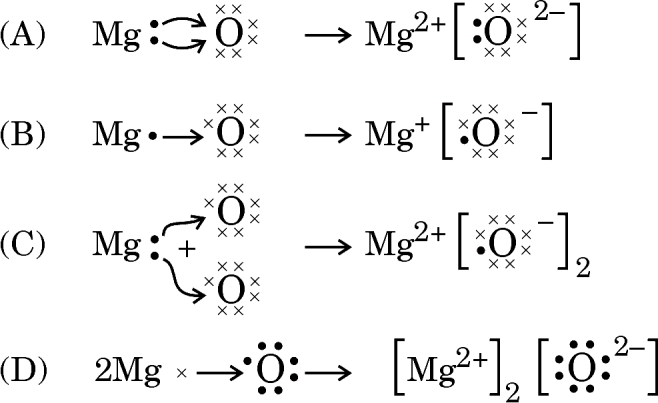
Q2. The products formed when Aluminium and Magnesium are burnt in the
presence of air respectively are :
Choose an option to check
🔥 CBSE 2025 Board Exam — Q3 (1 Mark)1 Mark
Q3. The following table shows the pH values of four solutions A, B, C, and D on a pH scale:
| Solution | A | B | C | D |
| :--- | :---: | :---: | :---: | :---: |
| pH Value | 2 | 7 | 10 | 14 |
The solutions A, B, C, and D respectively are of a:
Choose an option to check
🔥 CBSE 2025 Board Exam — Q4 (1 Mark)1 Mark
Q4. Consider the following reactions :
(i)
Dilute hydrochloric acid reacts with sodium hydroxide.
(ii)
Magnesium oxide reacts with dilute hydrochloric acid.
(iii)
Carbon dioxide reacts with sodium hydroxide.
It is found that in each case :
Choose an option to check
🔥 CBSE 2025 Board Exam — Q5 (1 Mark)1 Mark
Q5. Reaction between two elements A and B, forms a compound C. A loses
electrons and B gains electrons. Which one of the following properties
will not be shown by compound C ?
Choose an option to check
🔥 CBSE 2025 Board Exam — Q6 (1 Mark)1 Mark
Q6. The metals obtained from their molten chlorides by the process of
electrolytic reduction are :
Q8. Secretion of less saliva in mouth will effect the conversion of :
Choose an option to check
🔥 CBSE 2025 Board Exam — Q9 (1 Mark)1 Mark
Q9. The plant hormone whose concentration stimulates the cells to grow
longer on the side of the shoot which is away from light is :
Choose an option to check
🔥 CBSE 2025 Board Exam — Q10 (1 Mark)1 Mark
Q10. The correct/true statement(s) for a bisexual flower is/are :
(i)
They possess both stamen and pistil.
(ii)
They possess either stamen or pistil.
(iii)
They exhibit either self-pollination or cross-pollination.
(iv)
They cannot produce fruits on their own.
Choose an option to check
🔥 CBSE 2025 Board Exam — Q11 (1 Mark)1 Mark
Q11. If pea plants with round and green seeds (RRyy) are crossed with pea
plants having wrinkled and yellow seeds (rrYY), the seeds developed by
the plants of F1 generation will be :
Choose an option to check
🔥 CBSE 2025 Board Exam — Q12 (1 Mark)1 Mark
Q12. The breakdown of glucose has taken the following pathway :
Glucose
(a)
⎯⎯⎯
→ Pyruvate + Energy
(b)
⎯⎯⎯
→ Lactic acid + Energy
The sites ‘a’ and ‘b’ respectively are :
Choose an option to check
🔥 CBSE 2025 Board Exam — Q13 (1 Mark)1 Mark
Q13. Mirror ‘X’ is used to concentrate sunlight in solar furnace and Mirror ‘Y’
is fitted on the side of the vehicle to see the traffic behind the driver.
Which of the following statements are true for the two mirrors ?
(i)
The image formed by mirror ‘X’ is real, diminished and at its focus.
(ii)
The image formed by mirror ‘Y’ is virtual, diminished and erect.
(iii)
The image formed by mirror ‘X’ is virtual, diminished and erect.
(iv)
The image formed by mirror ‘Y’ is real, diminished and at its focus.
Choose an option to check
🔥 CBSE 2025 Board Exam — Q14 (1 Mark)1 Mark
Q14. An old person is suffering from an eye defect caused by weakening of
ciliary muscles and diminishing flexibility of the eye lens. If the defect of
vision is ‘a’ which can be corrected by lens ‘b’, then ‘a’ and ‘b’ respectively
are :
Choose an option to check
🔥 CBSE 2025 Board Exam — Q15 (1 Mark)1 Mark
Q15. Which of the following groups do not constitute a food chain ?
(i)
Wolf, rabbit, grass, lion
(ii)
Plankton, man, grasshopper, fish
(iii)
Hawk, grass, snake, grasshopper, frog
(iv)
Grass, snake, wolf, tiger
Choose an option to check
🔥 CBSE 2025 Board Exam — Q16 (1 Mark)1 Mark
Q16. The percentage of solar energy which is not converted into food energy by
the leaves of green plants in a terrestrial ecosystem is about :
Choose an option to check
🔥 CBSE 2025 Board Exam — Q17 (1 Mark)1 Mark
Q17. Assertion (A) : Decomposition
reactions
are
generally
endothermic
reactions.
Reason (R) :
Decomposition of organic matter into compost is an
exothermic process.
Choose an option to check
🔥 CBSE 2025 Board Exam — Q18 (1 Mark)1 Mark
Q18. Assertion (A) : A human child bears all the basic features of human
beings.
Reason (R) :
It looks exactly like its parents, showing very little
variations.
Choose an option to check
🔥 CBSE 2025 Board Exam — Q19 (1 Mark)1 Mark
Q19. Assertion (A) : No two magnetic field lines are found to cross each other.
Reason (R) :
The compass needle cannot point towards two directions
at the point of intersection of two magnetic field lines.
Choose an option to check
🔥 CBSE 2025 Board Exam — Q20 (1 Mark)1 Mark
Q20. Assertion (A) : The amount of ozone in the atmosphere began to drop
sharply in the 1980s.
Reason (R) :
The oxygen atoms combine with molecular oxygen to form
ozone.
SECTION B
Questions no. 21 to 26 are Very Short Answer Type questions.
Q23.(a)
Besides minimising the loss of blood, why is it essential to plug any leak in a blood vessel? Name the component of blood which helps in this process and state how this component performs this function.
---
OR
---
(b)
* (i) The transport system in plants is relatively slower than in animals. Give reasons.
* (ii) State the role of phloem in the transport of materials in plants.
Q24. An object is placed at a distance of 60 cm from a concave lens of focal length 30 cm. Use the lens formula to find the position of the image formed in this case.
Q25.(a)
A wire of resistance R is cut into three equal parts. If these three parts are then joined in parallel, calculate the total resistance of the combination so formed.
---
OR
---
(b)
Define electric power. When do we say that the power consumed in an electric circuit is 1 watt?
Q27.(a)
‘‘Displacement reactions also play a key role in extracting metals in the middle of the reactivity series.’’ Justify this statement with two examples.
(b)
Why can metals high up in the reactivity series not be obtained by reduction of their oxides by carbon?
Q28.(a)
With the help of an activity, explain the conditions under which iron articles get rusted.
---
OR
---
(b)
* (i) Name two metals which react violently with cold water. List any three observations which a student notes when these metals are dropped in water.
* (ii) Name the gas evolved during this reaction and describe the test to identify this gas.
Q29. Plants have neither a nervous system nor muscles, even then they respond to stimuli. For example, the leaves of chhui-mui (touch-me-not) plant when touched begin to fold up and droop.
(a) How is the information communicated in touch-me-not* plants?
* (b) What enables the plant cells to bring out the observable response?
* (c) Differentiate the movement mentioned above from the movement of tendrils in a pea plant.
Q31. Draw ray diagrams to show the nature, position, and relative size of the image formed by a convex mirror when the object is placed:
* (i) at infinity, and
* (ii) between infinity and pole (P) of the mirror.
Q32. Consider the following electric circuit:
!Electric circuit diagram with parallel and series resistors
Calculate the values of the following:
* (a) The total resistance of the circuit
* (b) The total current drawn from the source
* (c) Potential difference across the parallel combination of 10Ω and 15Ω resistors
Q33.(a)
Write the relationship between resistivity and resistance of a cylindrical conductor of length l and area of cross-section A. Hence derive the SI unit of resistivity.
(b)
The resistance of a given cylindrical conductor of length l and cross-section A is 10Ω. What will be its new resistance and resistivity if its length is doubled by stretching, keeping temperature constant?
Q34.(a)
* (i) Draw two isomeric structures of Butene (C4H8).
* (ii) Name the following organic compounds:
* (I)CH3−CH2−CH2−Cl
* (II)CH3−CO−CH2−CH3
* (iii) Write balanced chemical equations for the following reactions (mention one essential reaction condition for each):
* (I) Oxidation of ethanol using alkaline KMnO4.
* (II) Reaction of ethanoic acid with sodium hydrogen carbonate.
---
OR
---
(b)
* (i) What are homologous series of carbon compounds? State any two characteristics of a homologous series.
* (ii) Explain the cleansing action of soaps with the help of a suitable diagram showing micelle formation.
Q35.(a)
* (i) Write the functions of the following parts of the human female reproductive system:
* (I) Ovary
* (II) Fallopian tube
* (III) Uterus
* (ii) State briefly two contraceptive methods used by human males.
---
OR
---
(b)
* (i) Differentiate between self-pollination and cross-pollination.
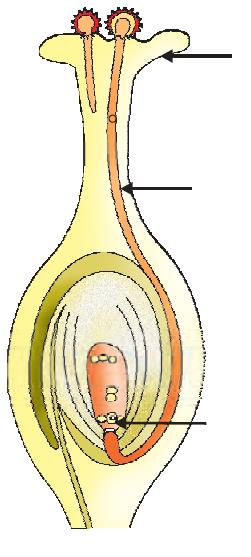
* (ii) Identify parts A, B, and C in the given carpel diagram and write one function of each:
!Carpel diagram showing parts A, B, and C
Q36.(a)
* (i) The power of a lens ‘X’ is −2.5 D. Name the lens and determine its focal length in cm. For which eye defect of vision will an optician prescribe this type of lens as a corrective lens?
* (ii) ‘‘The value of magnification m for a lens is −2.’’ Using the new Cartesian Sign Convention and considering that an object is placed at a distance of 20 cm from the optical centre of this lens, state:
* (I) the nature of the image formed;
* (II) size of the image compared to the size of the object;
* (III) position of the image; and
* (IV) sign of the height of the image.
* (iii) The numerical values of the focal lengths of two lenses A and B are 10 cm and 20 cm respectively. Which one of the two will show a higher degree of convergence/divergence? Give reason to justify your answer.
---
OR
---
(b)
* (i) Draw a ray diagram to show the refraction of a ray of light through a rectangular glass slab when it falls obliquely from air into glass.
* (ii) State Snell’s law of refraction of light.
* (iii) Differentiate between the virtual images formed by a convex lens and a concave lens on the basis of:
* (I) object distance, and
* (II) magnification.
🎯 Required Board Keywords0/5 Captured
○power
○lens
○text
○Name
○determine
Questions 37 to 39 are Source-based / Case-based questions carrying 4 marks each with internal sub-parts. Read each case study carefully and answer the questions that follow.
Q37. Seawater contains many salts dissolved in it. Common salt is separated from these salts. Deposits of solid salt are also found in several parts of the world. These large crystals are often brown due to impurities. This is called rock salt and is mined like coal. The common salt is an important raw material for chemicals of daily use.
* (a) Write balanced chemical equations to show the products formed during electrolysis of brine. (1 Mark)
* (b) List two uses of any one product obtained during electrolysis of brine. (1 Mark)
* (c)
* (i) A mild non-corrosive basic salt ‘A’, used for faster cooking, is strongly heated to produce a compound ‘B’, that is used for removing permanent hardness of water. Identify A and B and also write the equation for the reaction that occurs when A is heated. (2 Marks)
* OR (ii) Define water of crystallisation. Give two examples of salts that have water of crystallisation. (2 Marks)
Q38. The maintenance functions of all living organisms must go on even when they are not doing anything particular. Even when we are just sitting in a class or even asleep, this maintenance job has to go on. These maintenance processes require energy to prevent damage and break-down of cells and tissues, which is obtained by the individual organism from outside the body.
* (a) Name and define the life process by which green plants obtain food and store energy. (1 Mark)
* (b) How do desert plants perform this process despite keeping stomata closed during daytime? (1 Mark)
* (c)
* (i) List the three major biochemical events that occur during photosynthesis. (2 Marks)
* OR (ii) What is the fate of excess carbohydrates synthesized during photosynthesis in plants and in animals? (2 Marks)
Q39. In our homes, we receive the supply of electric power through a main supply (also called mains), either supported through overhead electric poles or by underground cables. In our country, the potential difference between the live wire and neutral wire of this supply is 220 V.
* (a) State the international colour conventions for the insulation covers of the live wire and the neutral wire. (1 Mark)
* (b) An electric appliance rated 1 kW is operated in a 220 V domestic circuit. Calculate the current drawn and determine the required fuse rating (5 A or 15 A). (1 Mark)
* (c)
* (i) What is the function of an earth wire in domestic electrical appliances having a metallic body? Why is it essential to connect it to a metallic plate deep in the ground? (2 Marks)
* OR (ii) Explain what happens during: (I) overloading, and (II) short-circuiting in a domestic circuit. (2 Marks)